Rosé wine is a wine made from red or pink skinned grapes that gets its soft colour from a short contact between the juice and the skins, from a few hours to about a day. It is not a blend of white and red, but a style of its own with its own technique. In Greece, grapes like Agiorgitiko and Moschofilero make lovely rosé. Here is how it is made, how to serve it and what to eat with it.
What is rosé wine
Many people think rosé is made by mixing white and red wine. In fact, in the European Union, blending white and red wine to make still rosé is not allowed. The exception is some sparkling wines, such as certain rosé Champagnes.
The secret is in the skins. The juice of almost all grapes, even the darkest ones, is clear. The colour, the tannins and much of the aroma sit in the skin. For red wine, the juice stays with the skins for days or weeks. For rosé, the contact lasts only a few hours, so the wine picks up a little colour and very few tannins.
The result is a wine that sits between the two. It has the freshness and acidity of a white and some of the red fruit of a red, such as strawberry, cherry and pomegranate. To see how the other two styles are made, read our guides to white wine and red wine.
How rosé wine is made: three methods
Winemakers have three main ways to make rosé. The choice depends on the grape, the colour they want and the style of the wine.
- Short maceration. Red grapes are crushed and the juice stays with the skins for a few hours, usually 2 to 24. Once it reaches the colour the winemaker wants, the juice is separated and fermented like a white wine. This is the most common method and gives rosé with clean fruit and medium colour.
- Saignée. The winemaker is making a red wine and, early in the maceration, draws off part of the juice from the tank. That juice becomes rosé, while the red left behind becomes more concentrated. These rosés usually have a deeper colour and more body.
- Direct press. The grapes are pressed straight away, whole or lightly crushed, and the juice only takes colour while the press is working. This gives the very pale rosés, with delicate aromas and lively acidity.
After the juice leaves the skins, fermentation usually takes place at low temperatures in stainless steel tanks, to keep the fresh aromas.
Rosé wine taste, colour and styles
Rosé ranges from a very pale, almost salmon pink to a deep pink close to light red. The colour mostly shows how long the juice stayed with the skins and how dark the grape skin is. On its own, it does not tell you whether the wine is sweet or dry.
Most rosés today are dry. There are also off dry and medium sweet rosés, where some of the grape sugar stays in the wine. The label is the safest guide.
| Style | Colour | Taste | Best for |
|---|---|---|---|
| Pale dry | Very light, salmon or onion skin | Delicate, citrus, lively acidity | Aperitif, seafood, salads |
| Medium dry rosé | Strawberry pink | Red fruit, fresh, light body | Mediterranean food, grilled fish, meze |
| Deep dry | Bright pink, almost cherry | Fuller, cherry, a touch of tannin | Poultry, grilled vegetables, barbecue |
| Off dry or medium sweet | Light to medium pink | Fruity, with noticeable sweetness | Spicy dishes, Asian food, fruit |
Greek grapes for rosé
Greece has several grapes that suit rosé very well. Three of them stand out.
Agiorgitiko
The red grape of Nemea and the Peloponnese is often called multidynamic, because it makes a wide range of styles, from fresh rosé to reds for long ageing. As a rosé it gives a bright pink colour, aromas of strawberry, cherry and pomegranate and a round, friendly taste. See how the same grape becomes an aged red in our Agiorgitiko Cava.
Moschofilero
Moschofilero has pink skin and is the most aromatic grape of the Fileri family. It is mostly made into dry white wine, but with a little skin contact it gives a very pale rosé with aromas of rose, citrus and fresh fruit and lively acidity.
Xinomavro
The great red grape of northern Greece makes rosé with a delicate colour, crisp acidity and aromas of red fruit, tomato and spice.
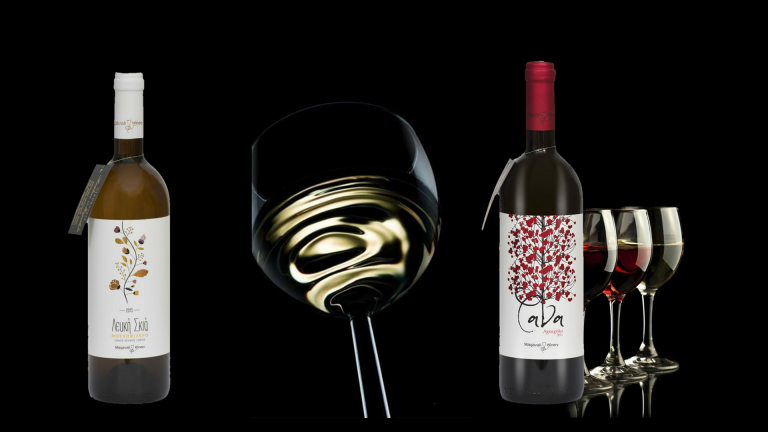
At our winery in Skotini, Argolida, we grow two of these three grapes, Moschofilero and Agiorgitiko, at 820 metres. We chose them because they are Greek, they suit the local climate and they make lovely wines in every colour, white, rosé and red. Today we use them for our dry white Moschofilero White Shadow and our dry red Agiorgitiko Cava.
Calories and how to serve rosé
How many calories
The calories in wine come mainly from alcohol and from any sugar left after fermentation. A dry rosé has roughly 115 to 130 calories per 150 ml glass. A medium sweet one, with more sugar, can reach roughly 130 to 150.
Serving tips
- Temperature: 8 to 10 °C. Fuller rosés can take 10 to 12 °C. If it is too cold, the aromas close up.
- Chilling: about two to three hours in the fridge, or 20 minutes in an ice bucket with water and ice.
- Glass: a white wine glass with a tulip shaped bowl that holds the aromas.
- No ice cubes: ice melts, waters down the wine and dulls the aromas. Keep the bottle in an ice bucket next to the table instead.
- After opening: close the bottle well and keep it in the fridge. Rosé usually lasts three to five days.
Rosé food pairing
Rosé is one of the most flexible wines at the table. It has enough acidity to cut through rich food and enough fruit to stand next to light meats. That is why it works so well with Mediterranean cooking, with its olive oil, vegetables, fish and herbs.
| Dish | Rosé style | Why it works |
|---|---|---|
| Grilled fish and seafood | Pale dry | The acidity refreshes without covering delicate flavours |
| Stuffed tomatoes, briam, vegetable stews | Medium dry | The fruit meets tomato and olive oil |
| Salads with feta or goat cheese | Pale or medium dry | The freshness balances the salty cheese |
| Grilled chicken and pork | Deep dry | The fuller body stands up to grilled flavours |
| Pizza and pasta with tomato sauce | Medium or deep dry | Handles the tomato without heavy tannins |
| Spicy or Asian dishes | Off dry | A little sweetness softens the heat |
Rosé is also a great wine for meze. Stuffed vine leaves, octopus, meatballs, taramosalata and grilled vegetables all go well with it. You will find more ideas in our guide to wine snacks and meze.
Summer, and all year round
Rosé is linked with summer, the sea and long lunches in the shade, and for good reason. It is fresh, light and easy to drink in the heat. But there is no need to put it away in winter.
Fuller, deeper coloured rosés go beautifully with autumn dishes such as roast pumpkin, mushrooms, poultry and festive tables with turkey.