Red wine is made from dark grapes that ferment together with their skins, which give it its colour, tannins and aromas. To enjoy it at its best, choose a style you like, serve it at 16 to 18 °C and match it with the right food. This guide covers the main types of red wine, the Greek red grapes, calories, serving and storage, along with our own Agiorgitiko Cava from Skotini, Argolida, in the Peloponnese.
How red wine is made
The juice of most grapes is pale and the colour sits in the skins, so for red wine the grapes are crushed and the juice stays in contact with the skins and seeds while it ferments. Yeasts turn the sugars into alcohol and, at the same time, the skins release the compounds that give the wine its character:
- Anthocyanins: the pigments behind the red or purple colour. With age the colour turns towards brick red.
- Tannins: they give the drying feel in the mouth and the structure that lets a wine age.
- Aroma compounds: notes of red and black fruit, spices and herbs.
The longer the juice stays with the skins, the deeper the colour and the firmer the tannins. If the contact lasts only a few hours, you get a rosé, as we explain in our rosé wine guide. After fermentation, many reds mature in oak barrels, where they pick up notes of vanilla, smoke and spice and their tannins become rounder.
Greek red grapes and wine styles
Greece has a rich range of native red grapes, each with its own character. These are the best known.
| Grape | Main regions | Character |
|---|---|---|
| Agiorgitiko | Peloponnese, mainly Nemea and Argolida | Deep colour, red fruit, soft tannins. Makes everything from fresh to long aged wines. |
| Xinomavro | Macedonia, Naoussa, Amyntaio | High acidity, firm tannins, notes of tomato, olive and red fruit. Ages very well. |
| Mavrodaphne | Achaia, Kefalonia | Best known for sweet wines, also dry, with notes of raisin, dark fruit and spice. |
| Limnio | Lemnos, northern Greece | One of the oldest Greek grapes, medium body, red fruit and herbs. |
| Mandilaria | Crete, Rhodes, Cyclades | Very deep colour and strong tannins. Often used in blends. |
| Kotsifali | Crete | Soft, with notes of spice and ripe fruit. Often blended with Mandilaria. |
Agiorgitiko is the grape of our area. It is often called multidynamic, because it can make anything from fresh, fruity reds to dense wines for long ageing. To learn more, read our complete guide to the Agiorgitiko grape.
Light, medium or full bodied
Red wine types also differ in body, meaning how light or dense the wine feels in your mouth.
- Light bodied: pale colour, few tannins, fresh red fruit. Best drunk young and a little cooler.
- Medium bodied: a balance of fruit, acidity and tannins. The most flexible style for everyday meals.
- Full bodied: deep colour, rich tannins, often aged in oak. It needs food with character.
Calories and what is in a glass
Red wine calories
The calories in wine come mainly from alcohol and less from the sugar left after fermentation. A 150 ml glass of dry red wine has roughly 120 to 130 kcal. Wines with more alcohol have a little more, while sweet reds, such as sweet Mavrodaphne, have noticeably more.
What red wine contains
Because it ferments with the skins, red wine contains more polyphenols than white wine. These include anthocyanins, tannins and resveratrol, a compound found naturally in grape skins. They are what give red wine its colour, structure and ability to age. Wine also contains alcohol, so if you drink it, enjoy it in moderation and ideally with food.
Red wine temperature, airing and glass
Temperature changes the taste a lot. Too warm, a red wine feels heavy and alcoholic. Too cold, the tannins turn harsh and the aromas close up. The general rule is 16 to 18 °C, which is cooler than most homes in summer.
| Style | Serving temperature | Airing |
|---|---|---|
| Light, young | 14 to 16 °C | Usually not needed |
| Medium bodied | 16 to 17 °C | About 15 to 30 minutes in the glass |
| Full bodied, oak aged | 17 to 18 °C | About 30 to 60 minutes in a decanter |
Should red wine go in the fridge?
Yes, and often it should. Light reds need about 20 minutes in the fridge before serving. For fuller reds in a warm room, 10 to 15 minutes is enough to bring them down towards 17 or 18 degrees.
Airing and the right glass
Young, tannic wines open up with air: the tannins soften and the aromas come out. Choose a glass with a large, round bowl and fill it to about a third, so there is room to swirl.
Storage, and how long an open bottle lasts
Unopened bottles are best kept in a cool, dark place with a steady temperature, away from vibration and strong smells. If they have a cork, lay them on their side so the cork stays moist and keeps air out. Avoid the kitchen.
Once opened, red wine usually lasts 3 to 5 days if you seal it well and keep it in the fridge, as the cold slows down oxidation.
Quick tip for red wine stains
Act while the stain is fresh. Blot gently with paper towel without rubbing, rinse with cold water and cover it with salt or baking soda to draw out the liquid. Avoid hot water, as it can set the stain.
Food pairing
The simple rule is to match the weight of the wine with the weight of the dish. Light wines go with lighter food and full bodied wines with rich dishes, because fat and protein soften the tannins.
| Wine style | Goes well with |
|---|---|
| Light | Roast chicken, mushrooms, pasta with tomato sauce, oily fish such as tuna or salmon, cured meats |
| Medium | Moussaka, pastitsio, meatballs, stuffed vegetables, pizza, semi hard cheeses |
| Full bodied, oak aged | Grilled steaks, lamb and goat, game, meat in red sauce, aged cheeses |
| With dessert | Dark chocolate with a high cocoa content |
Be careful with very salty, sour or spicy dishes, which make tannins feel harsher. For a table of small plates, see our guide to Greek meze and wine pairing.
Our Agiorgitiko Cava
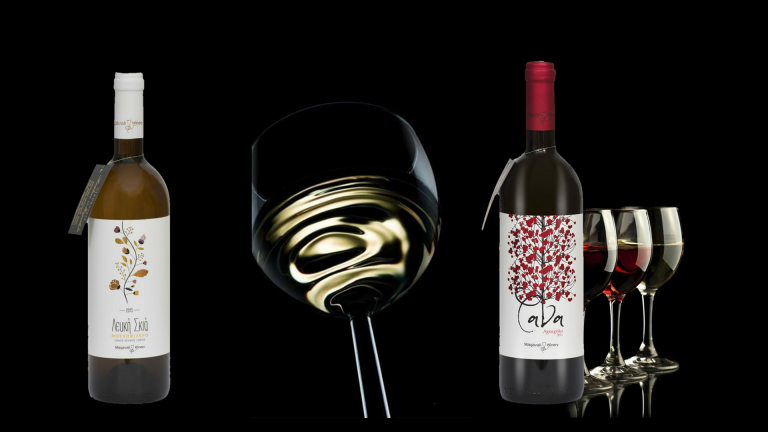
At our winery in Skotini, Argolida, our red wine is the Agiorgitiko Cava, a dry red with PGI Peloponnese. The grapes come from our own vineyard at the Tsapounia site, at 820 metres.
After the harvest, the grapes go through three days of cold maceration at 10 °C and 24 days of skin contact. It then ages for 36 months in new French and American oak barrels, in our underground ageing room, and for another 12 months in the bottle.
Its colour is purple with brick red hues. On the nose it shows chocolate, ripe cherry and raspberry, with vanilla from the oak. On the palate it is velvety and full bodied, with round tannins, a long finish and 13% alcohol. We recommend it at 18 °C with roast suckling pig, grilled steaks, game, aged cheeses or 75% dark chocolate. You can also taste it at our wine museum.