Moschofilero is a Greek grape with pink skin that is mostly used to make dry, crisp and highly aromatic white wine. A glass of moschofilero wine smells of roses and citrus, feels light on the palate and has a refreshing acidity. In this guide you will learn where it grows, what it tastes like, how to serve it and what to eat with it. At the end, we tell you how we make our own Moschofilero «White Shadow» in Argolida.
What is Moschofilero?
Moschofilero is a native grape of the Peloponnese and the most aromatic member of the Fileri family. When ripe, its berries are pink with greyish or purple tones, which surprises many people the first time they see them. Despite the colour of the skin, the juice is clear, so the wine comes out white as long as the must does not stay in contact with the skins for long.
The name sounds a bit like Muscat, and in Greek “moscho” hints at a sweet scent, but the two grapes are not related. Moschofilero ripens late, in autumn, and needs a cool climate to keep its freshness and acidity.
To see how it compares with other white wines, take a look at our white wine guide.
Where Moschofilero is grown: Mantinia and the Peloponnese
Moschofilero comes from the Peloponnese, in southern Greece, and above all from the Mantinia plateau in Arcadia, near the town of Tripoli. The vineyards there sit high up, winters are cold and summer nights are cool. These conditions let the grapes ripen slowly and keep their aromas and acidity.
Mantinia has its own Protected Designation of Origin, PDO Mantinia, which is based on Moschofilero, so you will often see the two names together on labels. The grape also grows in other mountain areas of the Peloponnese, and many of its wines carry the PGI Peloponnese indication.
Our own vineyards in Skotini, Argolida lie at 820 metres, around a small mountain village on the slopes of Mount Oligyrtos and Mount Trachy, so they share many of these traits.
Moschofilero taste and characteristics
You can recognise Moschofilero by its nose. As soon as you pour it, the glass fills with flowers and fruit. On the palate it is fresh and light, with an acidity that wakes up your taste buds and makes you want another sip. These are its main traits:
- Colour: pale lemon, crystal clear, often with green hues.
- Aromas: roses and rose petals, lemon blossom, citrus, green apple, sometimes lychee or a hint of pepper.
- Acidity: high and lively, its biggest strength at the table.
- Body: light, rarely heavy or oily.
- Alcohol: moderate, usually 11 to 12.5%.
- Finish: clean and fresh, with an aromatic end.
Moschofilero often smells sweeter than it tastes. The floral aromas lead many people to expect a sweet wine, but most Moschofilero wines are dry, with little or no residual sugar.
Moschofilero wine styles: dry white, rosé and sparkling
The pink skin gives winemakers several options. The same grape can make three main styles of wine.
Dry white
This is the classic and most common style. The juice is separated from the skins quickly and fermented in stainless steel tanks at low temperatures to keep the aromas. The result is a fresh, aromatic and light wine.
Rosé
When the juice stays in contact with the skins for a few hours, it takes on a pale pink colour and a little more texture. Moschofilero rosé is usually very light in colour, with red fruit aromas on top of the familiar rose notes.
Sparkling
Its high acidity makes Moschofilero a good base for sparkling wine. Sparkling Moschofilero is usually light, with fine bubbles and floral aromas, perfect as an aperitif or for a celebration.
How to serve Moschofilero and what to pair it with
Temperature and glass
Moschofilero should be served chilled, not ice cold. As a general rule, aim for 7 to 12 degrees Celsius. Cooler brings out the freshness, slightly warmer opens up the aromas. A simple trick: take the bottle out of the fridge 10 to 15 minutes before serving.
Choose a classic tulip shaped white wine glass with a medium bowl that narrows slightly at the rim, so the aromas gather and reach your nose.
Food pairing
Its lively acidity and aromas make Moschofilero one of the easiest wines to pair with food. It works especially well with light dishes, seafood and food with herbs and spices.
| Dish | Why it works |
|---|---|
| Grilled fish and seafood | The acidity refreshes the dish, like a squeeze of lemon. |
| Citrus salads, fruit salads | The fruity aromas of the wine match the fruit. |
| Dishes with white sauces | The freshness cuts through cream and butter. |
| Sushi, Asian dishes with ginger | The floral aromas stand up well to spices. |
| Cured meats and spicy cheeses | The acidity balances salt and fat. |
| Pizza, Greek greens pie | A light wine that does not weigh down the meal. |
| Stuffed vine leaves, octopus, fava | It opens the appetite without tiring the palate. |
For a more relaxed table, see our guide to wine snacks and meze.
Moschofilero vs Muscat
The similar names confuse many people, but these are completely different grapes. Muscat is not one grape but a large family of varieties grown all over the world, while Moschofilero is purely Greek.
| Moschofilero | Muscat | |
|---|---|---|
| Origin | Greek grape from the Peloponnese | A family of grapes grown worldwide |
| Berry colour | Pink | Mostly white, some dark forms |
| Main style | Dry white, rosé, sparkling | Often sweet wines, also dry |
| Aromas | Rose, citrus, lemon blossom | Fresh grapes, flowers, honey |
| Acidity | High | Low to medium |
| Body | Light | Light when dry, fuller when sweet |
| Known Greek areas | Mantinia, mountain Peloponnese | Samos, Patras, Lemnos, Kefalonia |
Put simply, if you want a fresh, dry and aromatic white with food, choose Moschofilero. If you want a sweet wine with dessert, Muscat is usually the classic choice.
How we make Moschofilero at Magavali Winery
Our winery was founded by Vasileios Magavalis in 1998 in Skotini, Argolida, and is still a family business.
Our Moschofilero grows at 820 metres, in sandy soil of a dark brown colour. It is harvested in early October and fermented in stainless steel tanks. The winery is built on several levels, so the must moves by natural flow, without the help of machines. We test our wines in our own laboratory, including microbiological analyses, and bottle them on our own bottling line.
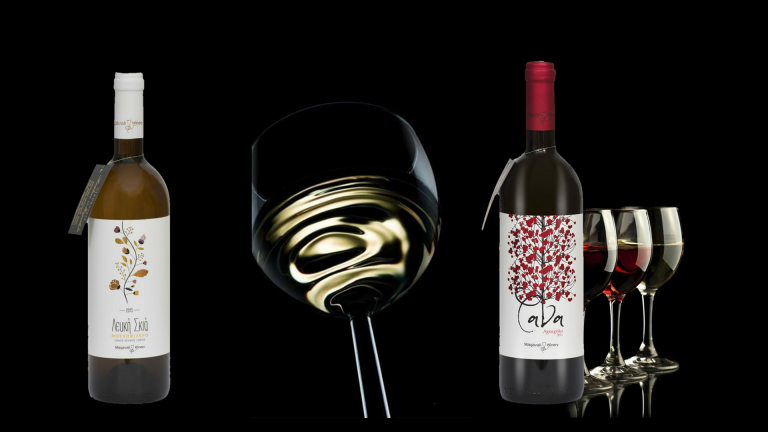
The result is «White Shadow», a dry white wine made from 100% Moschofilero, with PGI Peloponnese and 12.5% alcohol. On the nose it offers fine, exotic aromas of lychee, rose petals and lemon blossom. On the palate it is fresh, with a light body and lively acidity, and its colour is crystal clear with golden green hues. We recommend it at 12 degrees Celsius with grilled fish, white sauces or spicy cheeses.